Two Rhythms, One Home
Every shared home begins with two lived worlds.
In this project, we worked with a couple whose relationship to space, light, and rhythm differed in subtle but important ways. One gravitated toward brightness and clarity. The other toward warmth and layered depth. Both needed to feel recognised. Neither wanted to compromise.
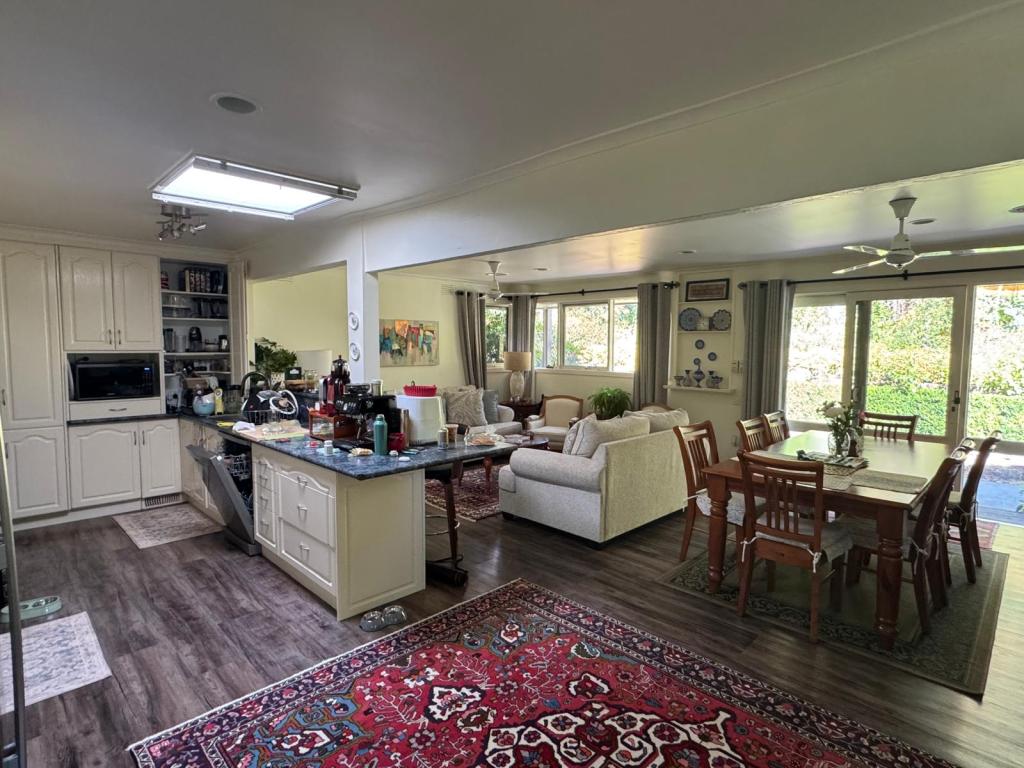
Our work began with conversation.
Through a series of guided interviews, we explored how each person experienced their home, where they felt calm, where they felt exposed, how they moved through mornings and evenings, how they gathered, rested, and focused.
Rather than designing from style, we designed from lived atmosphere.
Individual Spatial Profiles
One Partner (A) needed:
- Visual clarity
- Soft morning light
- Reduced sensory noise
- Open, breathable zones
The other partner (B) needed:
- Material warmth
- Textural depth
- Anchored seating
- Subtle enclosure
Each profile was honoured in dedicated zones of the home.
Reading corners, light calibration, material choices, and furniture orientation were adjusted to support each person’s way of inhabiting space.
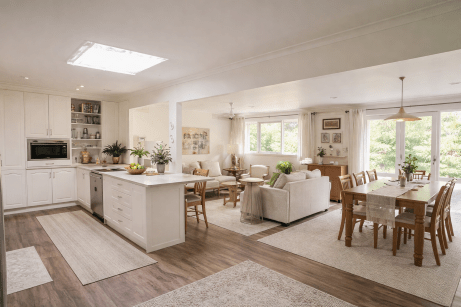
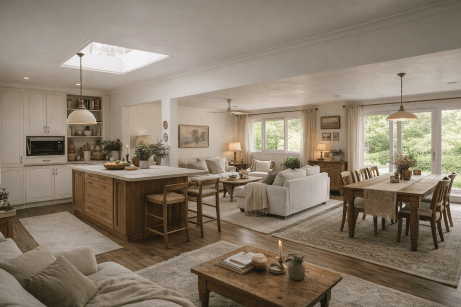
Designing the Shared Space
The living and dining areas became the heart of negotiation.
Instead of blending preferences into neutrality, we created:
- A bright yet softened envelope
- Layered materials without visual clutter
- Structured seating with gentle containment
- Zoning that allowed co-presence without intrusion
The shared space now holds both rhythms simultaneously.
It supports conversation and retreat, openness and grounding.
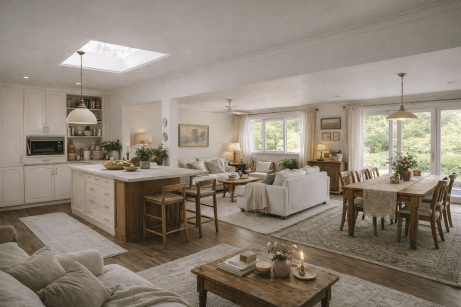
The home no longer asks one partner to adapt to the other.
It accommodates both.
The Narrative Dwelling Map
This visual framework translates lived atmosphere into spatial composition. It illustrates how personal rhythms, room intentions, and structural adjustments align to create a coherent dwelling.
The map is not a style guide.
It is a portrait of inhabitation.
Outcome
After the transformation, the clients described their home as:
- Brighter without feeling exposed
- Calmer without feeling empty
- More intimate without being enclosed
Most importantly, they reported feeling recognised within their own home.
The space now reflects who they are — individually and together.
That is the work of Narrative Dwelling Design:
Creating homes that accompany life rather than instruct it.
 Narrative Dwelling Design