Quiet Centre, Open Horizon
Some homes are rearranged.
Some homes are realigned.
This project began not with walls or furniture, but with a conversation. Through our Narrative Dwelling inquiry, we listened closely to how the client experiences home, how gathering feels, how quiet feels, and how light feels at the end of the day.
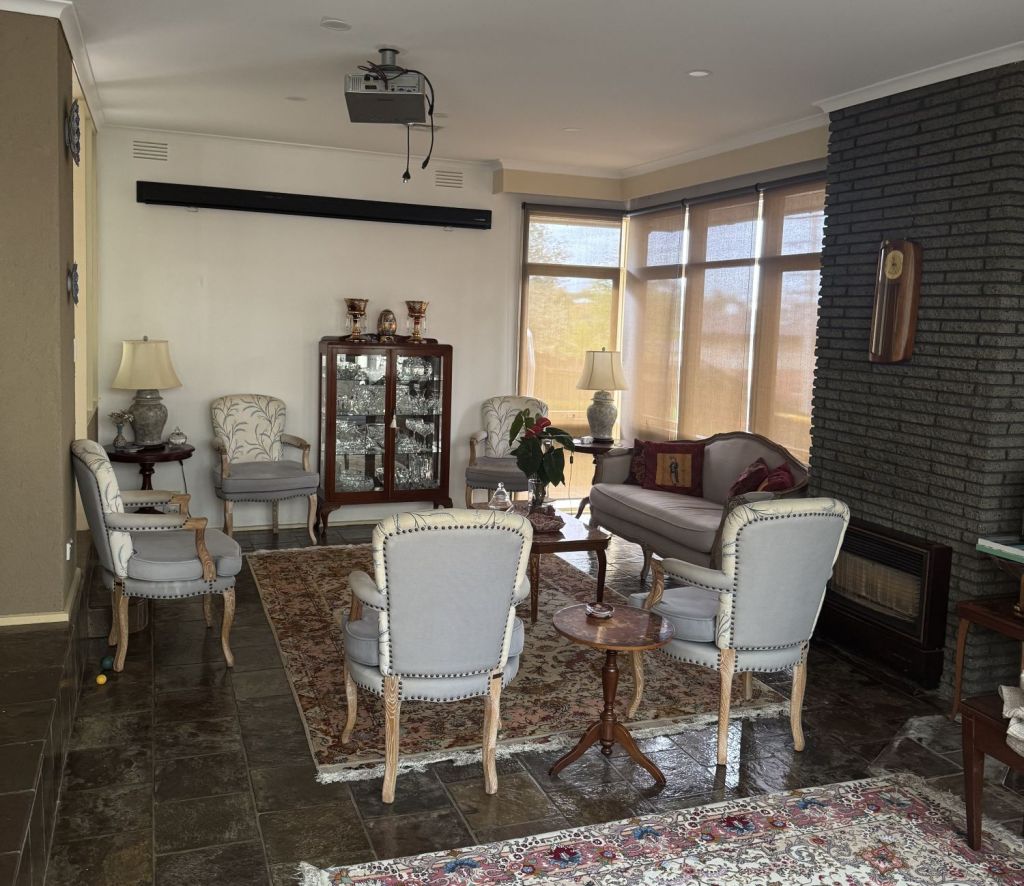
What emerged was not a style preference, but a spatial orientation. A need for a strong shared centre, balanced by moments of calm. A desire for brightness without harshness.
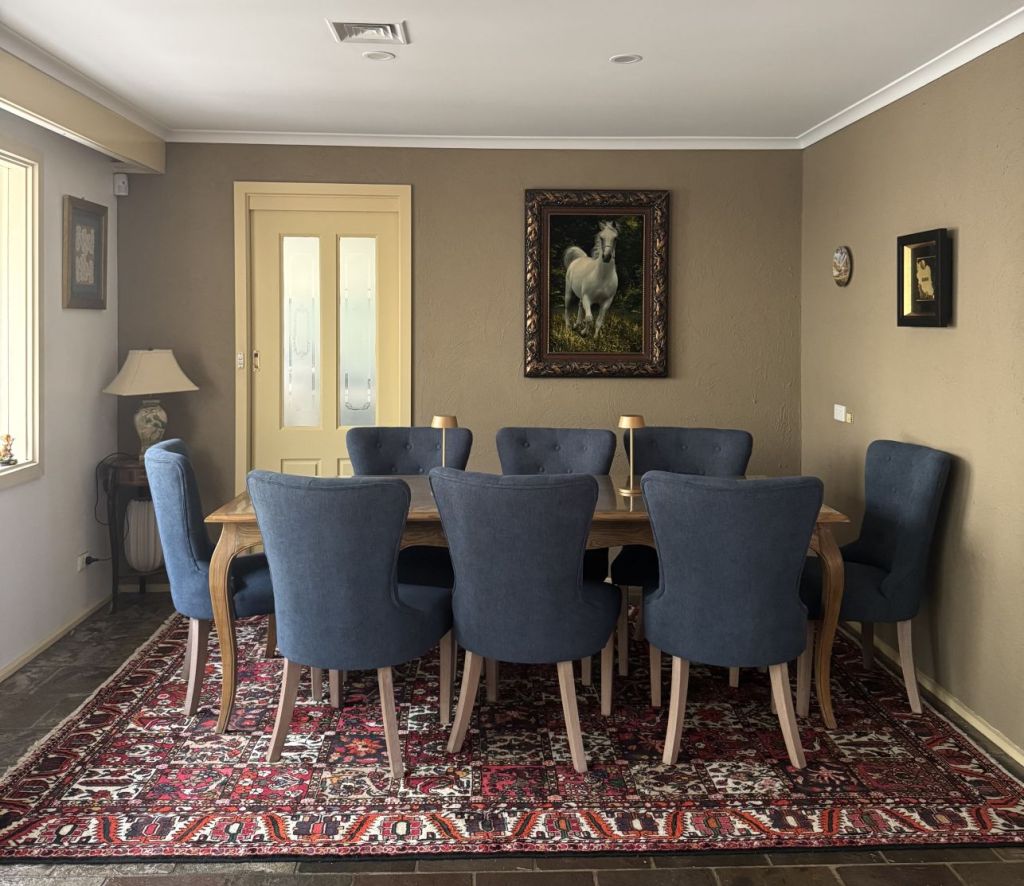
A preference for natural materials that ground the space without overwhelming it. A sensitivity to visual clutter. A rhythm that moves between connection and restoration.
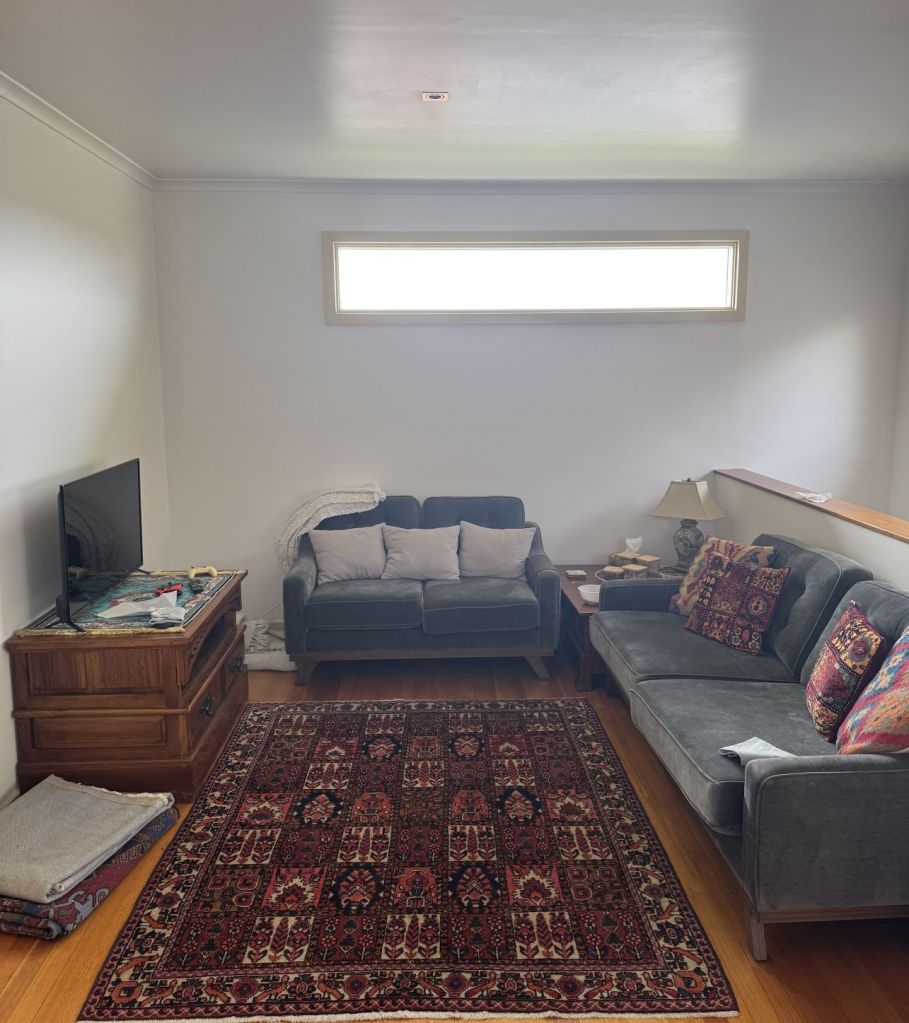
With this inner landscape in mind, we turned to the existing home.
Photographs became our second layer of listening. We observed how light entered the rooms, how circulation unfolded, where the eye naturally rested, and where visual density began to feel heavy. We paid attention to material weight, pattern layering, and the subtle tension between openness and crowding.
The architecture itself remained untouched. The room dimensions were fixed. Stair transitions, window positions, and structural boundaries were respected. The challenge was not expansion, but alignment.
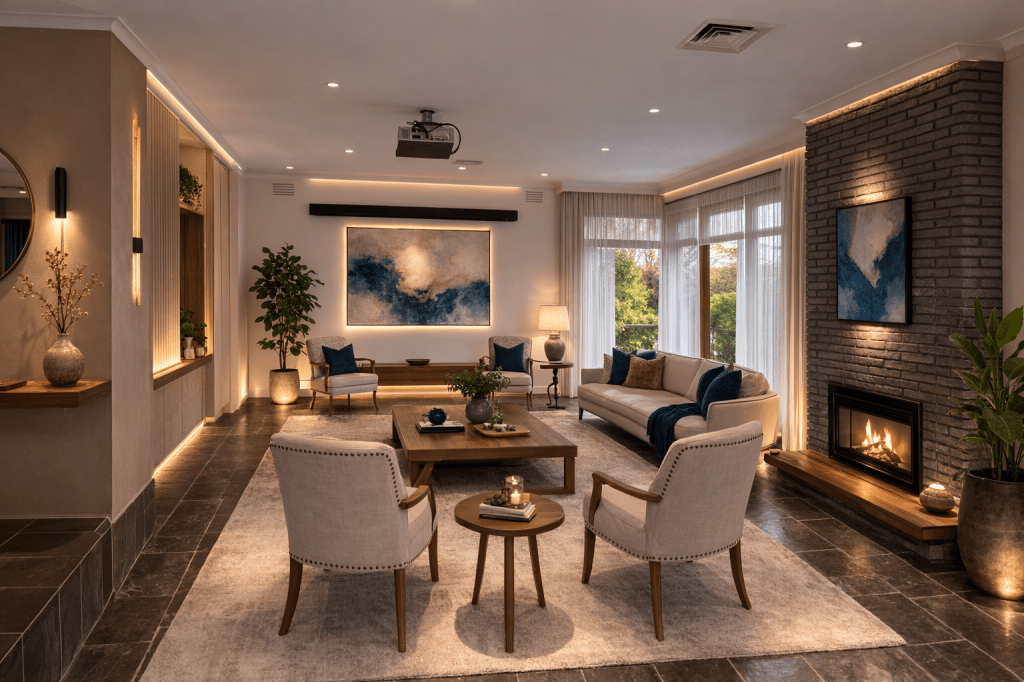
The transformation came through recalibration.
Furniture was repositioned to strengthen a clear social core. Visual noise was reduced so that surfaces could breathe. Colour was distilled into controlled accents rather than dispersed decoration. Light was allowed to move more freely across calmer wall tones. Circulation paths were clarified to support natural movement rather than interrupt it.
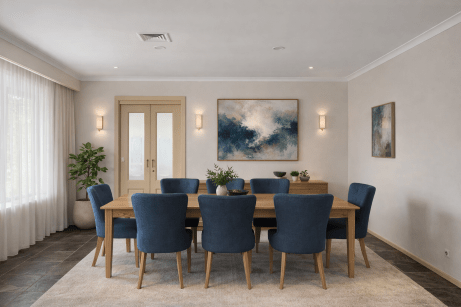
Even transitional spaces were treated as meaningful, not accidental. Movement through the home became part of the composition, not something to conceal.
To articulate the proposal, we created renderings grounded in the true proportions of the existing rooms. These visualisations do not invent new dimensions or remove architectural realities. Instead, they demonstrate how subtle decisions — fewer objects, clearer sightlines, restrained colour, grounded materials — can shift the emotional atmosphere of a space.
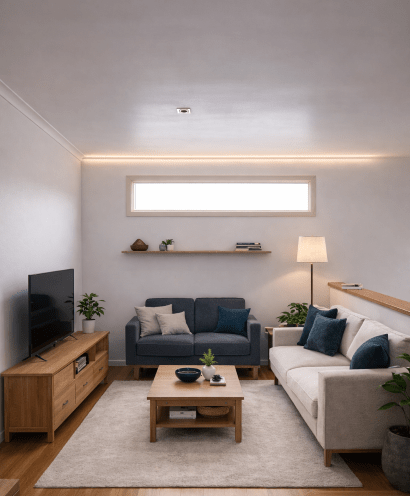
The result is not a dramatic redesign. It is a quiet correction.
The shared spaces feel more centred. The materials feel lighter. The rooms breathe more easily. Brightness is present without glare. Colour appears with intention. The home supports both gathering and slowing down.
This is the essence of our work.
We do not impose a style.
We reveal coherence.
When a space reflects the lived rhythm of its inhabitants, it becomes more than arranged furniture. It becomes a place that holds presence, invites connection, and allows stillness to exist alongside movement.
Not louder.
Clearer.
Not larger.
More aligned.
 Narrative Dwelling Design