The Thinking Garden
A Home Recalibrated for Focus and Flow
When this family reached out to us, they were not asking for a dramatic renovation. The structure was sound. The rooms were generous. The home was active, alive, full of movement and everyday life.
And yet, something felt misaligned.
The space functioned.
But it did not fully support the person who needed it most.
Listening Before Designing
At Narrative Dwelling Design, we begin not with furniture, but with questions.
Through our interview process, we explored daily rhythms, emotional needs, posture habits, material preferences, and subtle tensions within shared space. The goal was not to identify a style. It was to understand how this person lives.
Several themes emerged clearly:
Home was a base for activity and gathering.
But at the end of the day, quiet was essential.
Focus mattered more than comfort alone.
Open spaces were appreciated, yet noise felt overwhelming.
Thinking happened while walking.
Green felt grounding.
Soft, indirect light felt restorative.
In the middle of a busy family environment, there was a deep need for calm intellectual presence.
The home did not need more decoration.
It needed recalibration.
Reading the Existing Space
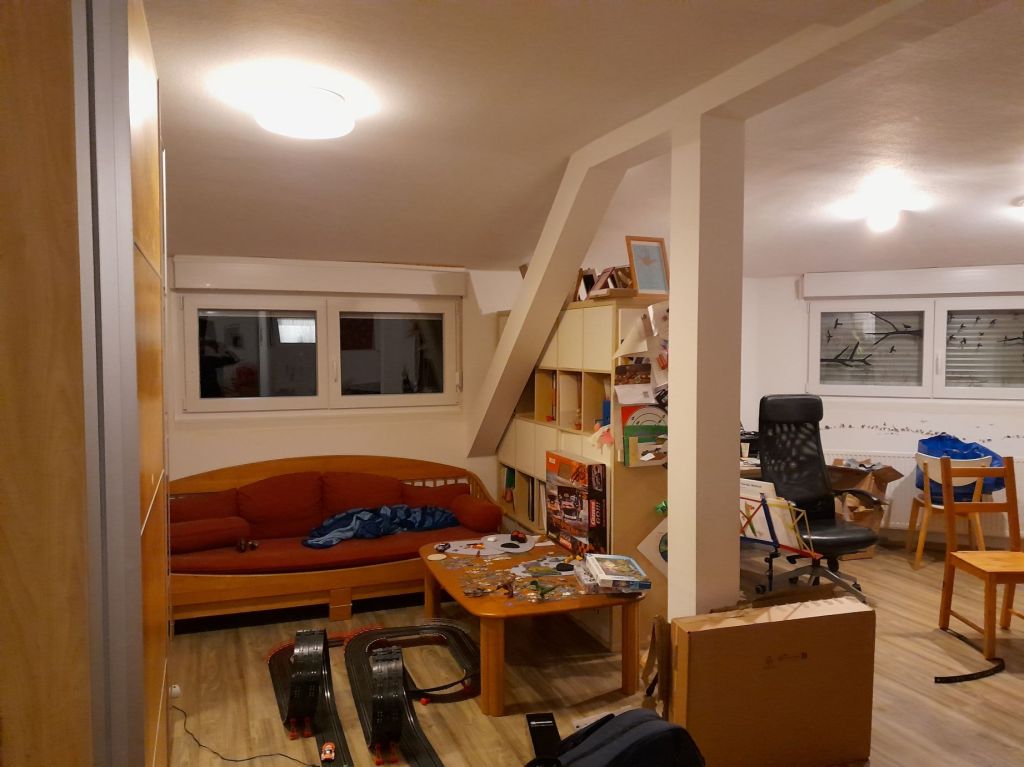
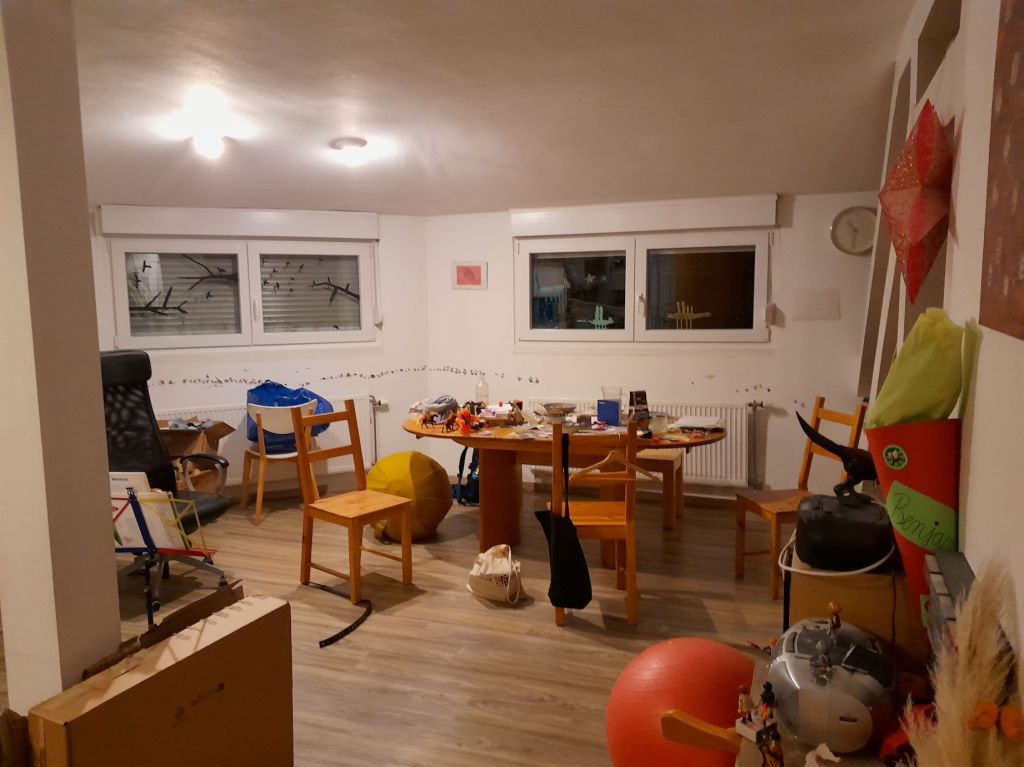
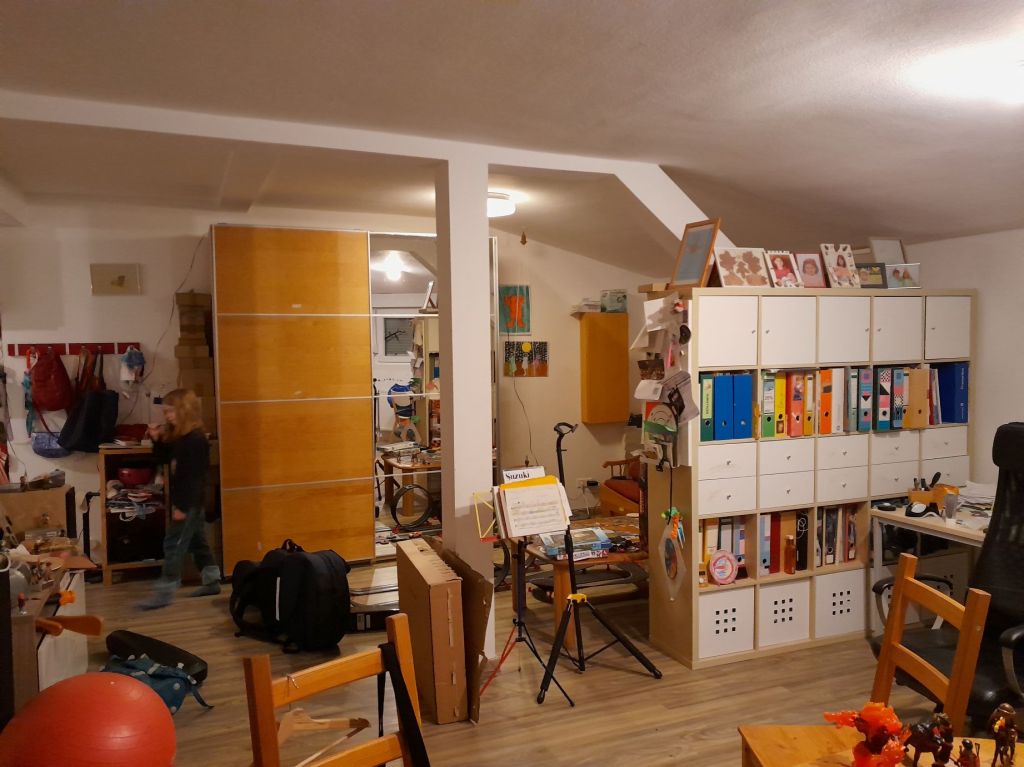
The rooms were open and flexible, which aligned well with shared family life. Warm wood already existed. There was generous floor area.
But everything carried equal visual weight.
Lighting was direct and flat.
Sound echoed.
Movement paths were accidental rather than intentional.
There was no clearly defined intellectual anchor.
The home was active, but not layered
Translating Narrative into Space
We translated the client’s lived experience into five spatial shifts.
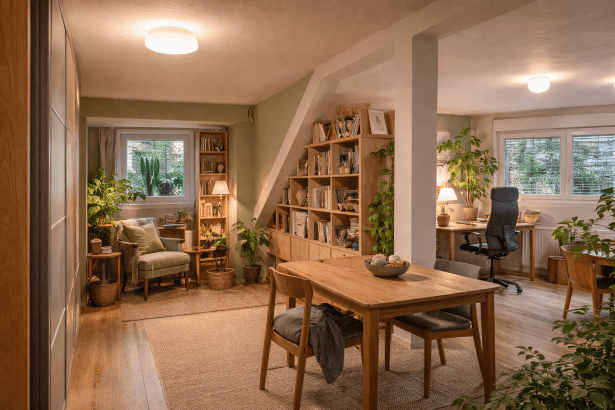
First, we softened the acoustic field. Large natural fibre rugs, textiles, and upholstered elements absorbed resonance. The room became quieter without becoming silent.
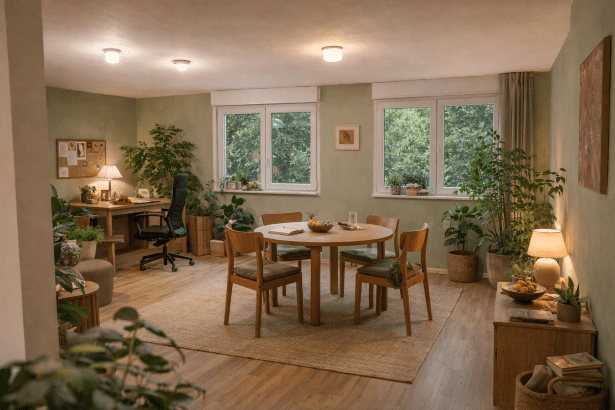
Second, we replaced reliance on ceiling lighting with layered, indirect sources. Warm table lamps and wall lighting created depth. Light no longer flattened the ceiling; it wrapped the room gently.
Third, we introduced layered green tones. One wall shifted into a muted botanical shade. Plants were positioned at floor, shelf, and eye level. The room began to relate to the garden beyond it, rather than feeling detached from it.
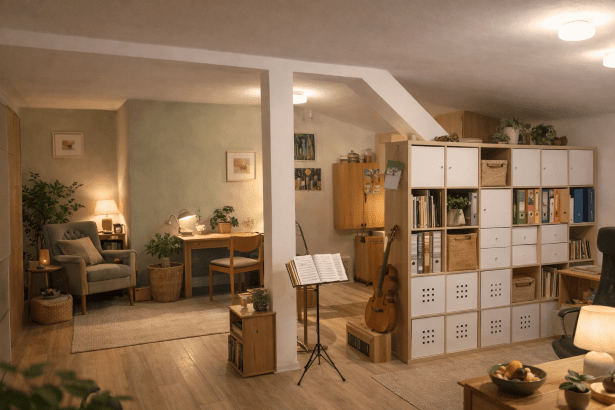
Fourth, we clarified movement. A walking loop was intentionally preserved. Furniture placement no longer blocked cognitive flow. The space allowed pacing, reflection, and posture variation.
Finally, we carved out a personal enclave within the shared environment. Under the slanted ceiling, a reading corner emerged. A comfortable chair, books within reach, soft lighting. Not isolated, but clearly defined. A place to sit and think without withdrawing from the family.
The centre of the room remained flexible. A shared table could host conversation, work, and gathering. But now it existed alongside a distinct zone of focus.
The Outcome
The transformation was not loud.
It did not depend on new walls or dramatic architectural change.
Instead, the home became what it had the potential to be all along: a cultivated interior landscape.
Open, yet acoustically softened.
Active, yet visually calm.
Shared, yet personally anchored.
When the client described their ideal moment in this space, they had written only two words:
“reading, calm.”
That is what the room now offers.
Not just a redesigned interior.
But a dwelling aligned with the rhythm of its inhabitant.
 Narrative Dwelling Design