
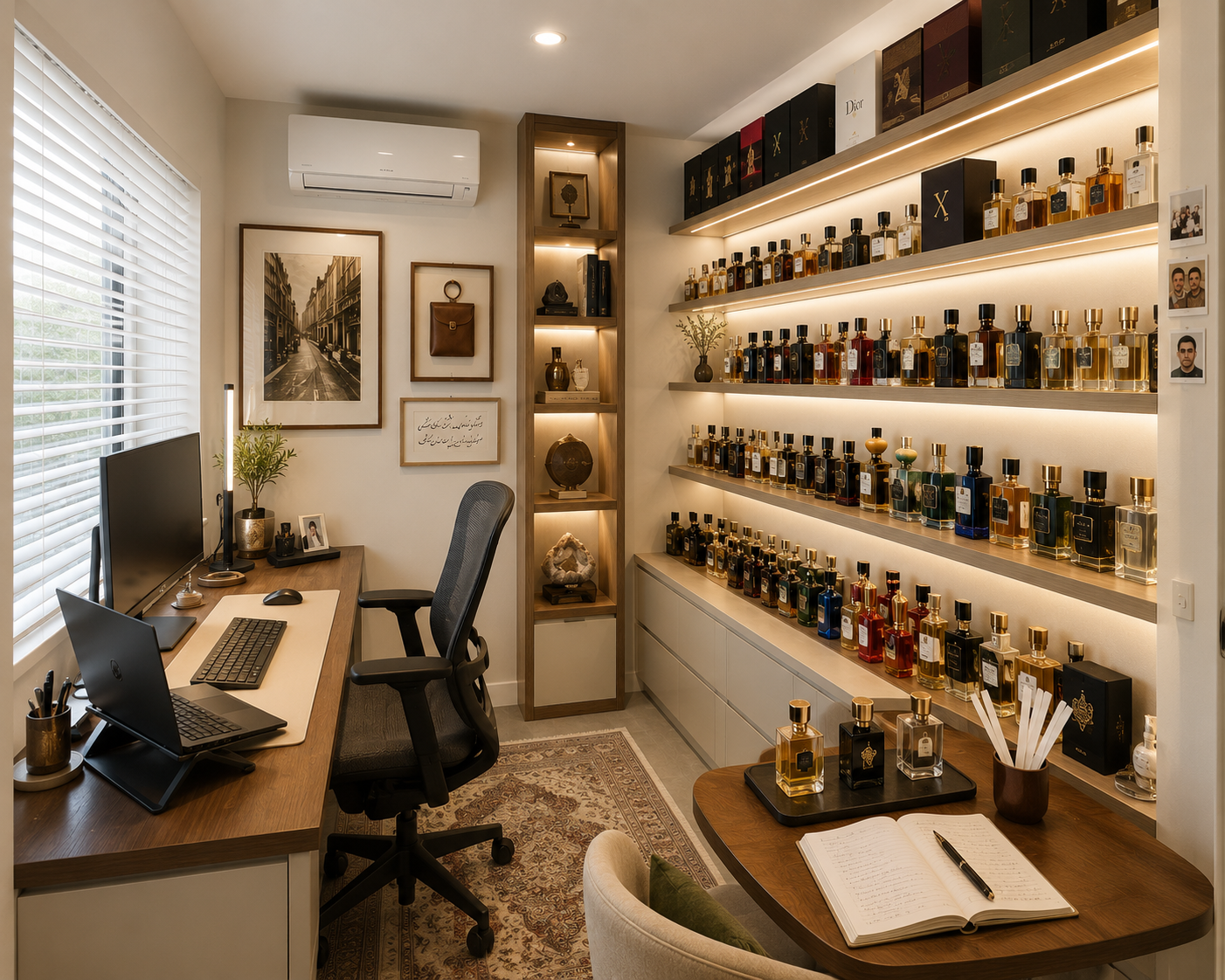
Rethinking Residential Interior Design Through Lived Experience
One of the enduring principles of modern architecture is that every room should have a clearly defined function. Bedrooms are designed for sleeping, kitchens for cooking, dining rooms for eating, and living rooms for entertaining. This way of thinking has shaped residential architecture for generations, offering clarity, efficiency, and order in how homes are planned. There is much to appreciate in this tradition.
Function remains an essential consideration in interior design, and every successful home must support the practical realities of everyday life. Yet when we pause to observe how people actually inhabit their homes, we begin to notice that life rarely unfolds according to the neat categories represented on a floor plan.
A dining room, for example, is seldom only a place where meals are shared. It may become a workspace during the day, a place where children complete their homework after school, a setting for birthday celebrations, difficult conversations, family meetings, or quiet evenings over a cup of tea. Likewise, a bedroom is not simply where we sleep. It may become a retreat for reading, a place to care for a newborn child, somewhere to recover from illness, or simply a space where solitude becomes possible after a demanding day.
The architecture has not changed.
The room has not changed.
What changes is the life unfolding within it.
This observation invites us to reconsider one of the assumptions that often underpins our interior design service in Melbourne. Rather than asking what function a room should have, perhaps we should begin by asking how the people who inhabit that room actually live.
This shift may appear subtle, but it changes the starting point of the entire design process.

Rather than treating function as an inherent property of space, we begin to understand it as something that emerges through human experience. Functions are not fixed characteristics permanently attached to rooms. They arise from everyday practices, relationships, intentions, and the changing circumstances of those who dwell within them.
Viewed from this perspective, the function of a room cannot be fully understood without first understanding the people whose lives give it meaning.
Imagine two families moving into identical houses.
Their floor plans are exactly the same. The dimensions, orientation, and materials are identical. Yet within a few months, the homes begin to differ profoundly. One family gathers around the dining table every evening, while another spends most evenings in the kitchen preparing meals together. One converts a spare bedroom into a music studio, while another transforms it into a nursery. One living room becomes a place for hosting friends, another becomes a quiet library, and another becomes the centre of everyday family life.
Nothing in the architecture predetermined these outcomes.
They emerged through the people themselves.
This insight has significant implications for Human-Centred Interior Design and the way we approach every interior design consultation in Melbourne. If functions emerge through people rather than rooms, then the role of the designer cannot simply be to organise spaces according to predetermined categories. Instead, the designer must first understand the lives that those spaces are intended to support.

At Narrative Dwelling Design, this understanding forms the foundation of our interior design process. Before discussing furniture layouts, colour palettes, finishes, or materials, we begin by listening. We seek to understand the rhythms of everyday life, the relationships that shape a household, the values people hold, the rituals that bring comfort, and the aspirations they carry into the future.
These conversations often reveal possibilities that could never emerge from a conventional room schedule alone.
Rather than asking whether a room should function as a study or a guest bedroom, we ask how flexibility might support a family’s changing needs over time.
Rather than assuming that every living room must accommodate entertaining, we explore how our clients actually spend their evenings and weekends. Rather than beginning with labels, we begin with lives.
This approach does not reject functionality. On the contrary, it seeks to deepen our understanding of it.
Good design has always been functional.
Meaningful design asks a different question:
Functional for whom?
At Narrative Dwelling Design (NDD), we believe the answer lies not within the room itself but within the lived experiences of the people who call it home. This is what distinguishes our approach to meaningful home and residential interior design, which we offer from our Melbourne base. Rather than assigning functions to rooms, we create environments that respond to the evolving narratives of everyday life.
A well-designed home is not one in which every room performs a single predefined task.
It is one in which people can live, grow, adapt, and continue to discover new possibilities throughout the different chapters of their lives.
Because ultimately, functions do not belong to rooms.
Functions emerge through people: The NDD’s Perspective
At Narrative Dwelling Design, we approach every project through the lens of ‘Human-Centred Interior Design’. Our work begins by understanding lived experience before shaping physical space, allowing each design to emerge from the unique stories, routines, relationships, and aspirations of the people who will inhabit it. Whether you are seeking home renovation advice, planning a new home, or exploring residential interior design in Melbourne, we believe that meaningful homes are created not by following trends, but by designing for the lives that unfold within them.
Leave a Reply